Editorial: Terafab’s Third Wheel — Intel, Washington, and the SpaceX-Only Contracts
Wall Street keeps pointing at the bulldozers in Grimes County as proof Tesla and SpaceX are converging. The public record shows a more complicated picture: a foundry partner partly owned by the federal government, and county contracts that name only one company.

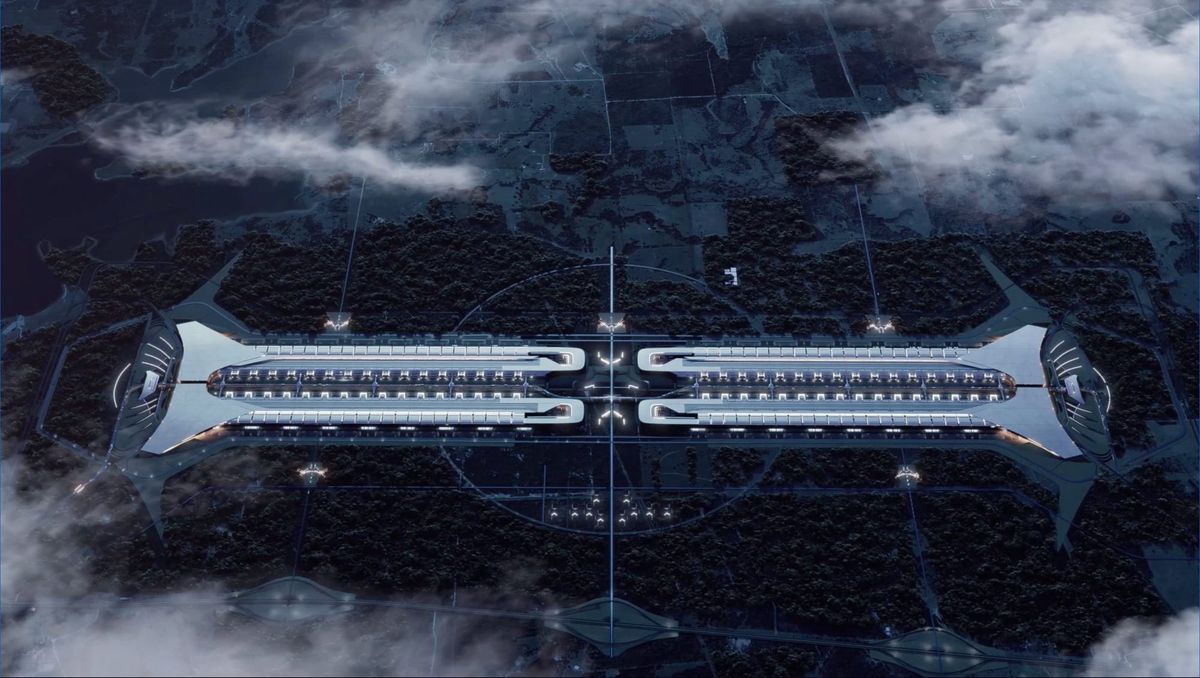
The narrative writes itself. Elon Musk has repeatedly pointed to “more and more overlap” between Tesla and SpaceX, and Terafab sits at the centre of that claim. The initial phase is now publicly pegged at roughly $16.8 billion in capital investment from the two companies, with future phases potentially pushing the total toward $119 billion. At least 3,000 jobs are projected at the Grimes County site. Analysts have leaned hard into the integration framing: Wedbush has called Terafab a likely first step toward an eventual merger, while RBC has sketched chip-cost synergies that could exceed $1 trillion by 2050. Construction is moving from concept to dirt. From a distance, the empire looks already integrated.
Look closer, however, and the details that are actually accumulating as the project becomes real cut against the clean “merger blueprint” reading most coverage has adopted. Three threads that sit in plain sight in the public record — SpaceX’s own S-1, the Grimes County incentive documents, Intel’s ownership filings, and the prediction-market tape — have received far less attention than the headline capital numbers and the merger speculation they are said to support. Those threads do not kill the longer-term possibility of a combination. They do show that the surface story of a private two-company convergence is incomplete, and in some important respects, premature.
The Foundry Partner Washington Already Owns a Slice Of
Terafab is not a pure two-company project. Intel joined as the foundry partner in April 2026, bringing process expertise and the 14A node that Musk has publicly flagged as the intended manufacturing technology once the full-scale facility ramps. SpaceX’s S-1, filed in May 2026, describes the arrangement in deliberately limited language. It characterises Terafab as a “general framework for the future development” of the project with Tesla. Specific projects under that framework, including development timelines, milestones, capital expenditures, and intellectual-property arrangements, remain “subject to separate negotiations and agreements” and “have not yet been determined.” The risk-factor language is explicit: neither Tesla nor Intel is obligated to remain part of the project, and there is no assurance the objectives will be achieved on the expected timetable, or at all.
That non-binding character matters. Public announcements and concept videos create the impression of a locked-in vertical-integration plan. The legal disclosure creates optionality for every party. Capital commitments, IP ownership, yield responsibility, and long-term offtake economics can still be renegotiated or walked away from. For investors trying to model who ultimately bears the cost and risk of a multi-phase, multi-tens-of-billions fab, the S-1 language is a reminder that the current structure is still more framework than finished contract.
Intel itself is not a neutral outside contractor. As of recent disclosures, the U.S. government holds approximately 9.9% of Intel’s outstanding shares — roughly 433 million shares — following the conversion of remaining CHIPS Act grants and Secure Enclave funds into equity. That stake made Washington Intel’s largest single shareholder. The government is a passive holder: it has no board seat and has agreed to vote its shares in alignment with the board. Still, the ownership is real, the stake is large, and the process technology Terafab is expected to rely on sits inside a company whose largest shareholder is the federal government.
This does not turn Terafab into a public project. It does mean the “private empire” narrative has a third institutional participant whose interests are not identical to Musk’s. Process-node maturity, foundry capacity allocation, export-control considerations, and any future changes in industrial-policy priorities now run through an entity that already has a meaningful public-ownership overlay. The clean story of two Musk companies simply building their own silicon supply therefore understates the actual governance and risk structure.
The Contracts Have One Name on Them
The local paperwork is even more revealing. Grimes County’s incentive package was negotiated and executed with SpaceX, not with a joint Tesla–SpaceX entity. The reinvestment zone is formally the SpaceX Reinvestment Zone. The Chapter 312 tax-abatement agreement and the Chapter 381 economic-development agreement carry SpaceX’s name and were signed by SpaceX CFO Bret Johnsen. The effective abatement is roughly 78%, structured as payments in lieu of taxes that total approximately $710 million over 35 years. Binding minimums in the agreements require SpaceX to invest at least $5 billion by 2030 and create at least 1,800 full-time jobs by 2035 — well below the public multi-phase ambition. SpaceX retains a unilateral walk-away right with 30 days’ written notice; the maximum penalty if it exits is $60 million — a modest figure relative to the scale of the project being discussed.
Tesla appears in joint press releases, in Musk’s public comments, and in the conceptual framing of the project as a capital and technology partner. It does not appear as a counterparty on the county contracts, the core land and incentive documents, or the water-related commitments tied to the Gibbons Creek site. The division of labour that has been described publicly is consistent with this legal reality: Tesla is leading the research fab on the North Campus of Giga Texas, while SpaceX is leading the full-scale Grimes County build. The legal and fiscal counterparty for the largest, most capital-intensive piece of the project remains SpaceX alone.
This is more than administrative housekeeping. Long-term PILOT structures, reinvestment-zone designations, and school-district JETI agreements create real economic exposure, real political commitments, and real liability pathways. When the documents that lock in those commitments name only one of the two companies that the merger narrative treats as already converging, the “one company, two divisions” framing is running ahead of the paperwork. Press language can be expansive; the signed contracts are not.
The walk-away clause sharpens the point. A project publicly discussed in the tens or hundreds of billions can, under the actual agreements, be exited by SpaceX for a maximum $60 million cost. That asymmetry between headline ambition and contractual flexibility is rarely highlighted in coverage that treats the bulldozers as proof of irreversible integration.
Three Venues, Same Facts, Three Different Stories
Prediction markets were supposed to impose discipline on the merger narrative. Instead they have produced a case study in how the same public information can generate sharply different implied probabilities. Kalshi has swung widely across various Tesla–SpaceX merger windows, with later-dated contracts (into 2027 and 2028) often pricing in the 50–70% range while nearer-term windows have sat far lower. Polymarket has remained more sceptical, falling to around 11% by mid-July before recovering only to the high teens for a 2026 announcement. Wedbush has remained anchored near 80–90% throughout the same period. Three venues, the same underlying facts about Terafab, and three materially different stories.
Part of the divergence is mechanical. The platforms use different time windows and resolution criteria. Some contracts resolve on a definitive binding agreement announced by a specific date; others look further out. Volume, liquidity, and the composition of participants also differ. Yet even after allowing for those differences, the spread remains wide. The physical project has become more concrete — site confirmation, initial capital figures, county agreements signed, foundation work approaching — while the implied probability of a near-term corporate combination has not converged.
That divergence itself is informative. Markets that are frequently cited as aggregators of information are, in this case, reflecting different prior weights on regulatory friction, valuation gaps between the two companies, China-related complications, defence-contract considerations, and the simple fact that the Terafab legal framework remains non-binding. Confidently cited “market odds” headlines deserve more scrutiny when the same set of public developments produces such persistent disagreement across platforms.
The project on the ground is becoming more real. The corporate-structure story that is supposed to accompany it is becoming noisier, not cleaner.
What Actually Moves the Risk
The near-term risk for holders of either company is not the precise probability of a merger announcement. It is the capital commitment itself. The $16.8 billion first phase, and any subsequent path toward the higher multi-phase figures discussed in filings and county documents, will be spent whether or not Tesla and SpaceX ever combine under a single corporate roof. Visibility into how that spend is split between the two companies remains limited; the inter-company financial terms have not been disclosed in detail. Balance-sheet capacity, free-cash-flow absorption, opportunity cost, and the timing of cash outflows will therefore hit both entities regardless of the final organisational chart Musk ultimately chooses.
Terafab can still succeed as a joint manufacturing effort, as an Intel-anchored foundry expansion with the Musk companies as large anchor customers, or as some hybrid of the two. The longer-term merger thesis can still prove correct. None of the three threads examined here rules those outcomes out. What they do show is that the cleanest version of the “empire is already integrated” narrative is running ahead of the documents, the ownership structure, and the market pricing of the corporate event itself.
The third wheel is real. The contracts have one name on them. The odds are diverging. Those three facts are now part of the public record, and they deserve more weight in any assessment of what Terafab actually signals about the future relationship between Tesla and SpaceX.
Data Sources:
- SpaceX S-1 (May 2026) language describing Terafab as a “general framework,” non-binding status of Tesla and Intel participation, and absence of finalised financial, IP, and timeline terms
- Grimes County Chapter 312 tax-abatement and Chapter 381 economic-development agreements, SpaceX Reinvestment Zone designation, and related execution documents (June 2026)
- Details of the ~78% effective abatement structure, $710 million PILOT total over 35 years, $5 billion / 1,800-job minimums, and $60 million maximum walk-away penalty
- Intel proxy statements and public disclosures on U.S. government shareholding (March 2026 data showing approximately 9.9% / 433 million shares)
- Company and county announcements confirming the $16.8 billion initial phase and multi-phase estimates up to $119 billion
- Public statements by Musk, SpaceX, Tesla, and Intel on partnership structure, division of labour (research fab vs full-scale), and intended use of Intel’s 14A process
- Kalshi and Polymarket historical pricing and contract specifications on Tesla–SpaceX merger windows throughout 2026
- Wedbush and RBC analyst commentary on merger probability, Terafab as a step toward combination, and long-term chip-cost synergy estimates
- Contemporary reporting on the sequencing of the March 2026 announcement, April 2026 Intel participation, May 2026 S-1 disclosure, June 2026 county agreements, and August 2026 site/capital confirmation
Wall St. Down Under | Australia
Subscribe | wallstdownunder.com.au
Disclaimer: Wall St. Down Under is an independent financial newsletter for informational and educational purposes only. Nothing published here constitutes financial advice, a recommendation to buy or sell any security, or a solicitation of any investment decision. Always do your own research and consult a licensed financial adviser before making investment decisions. Australian investors should consider their own financial situation, objectives, and risk tolerance. Past performance is not indicative of future results.