The CGT Reform & Double Taxation Playbook (a.k.a. Portfolio Structure & Tax Foundation Playbook)
Two tax systems want a piece of your US stock gains. Australia’s CGT reform agenda is reshaping what you owe here. The US withholding regime is bleeding your dividends. This playbook shows exactly how to navigate both — legally, methodically, and before 30 June.

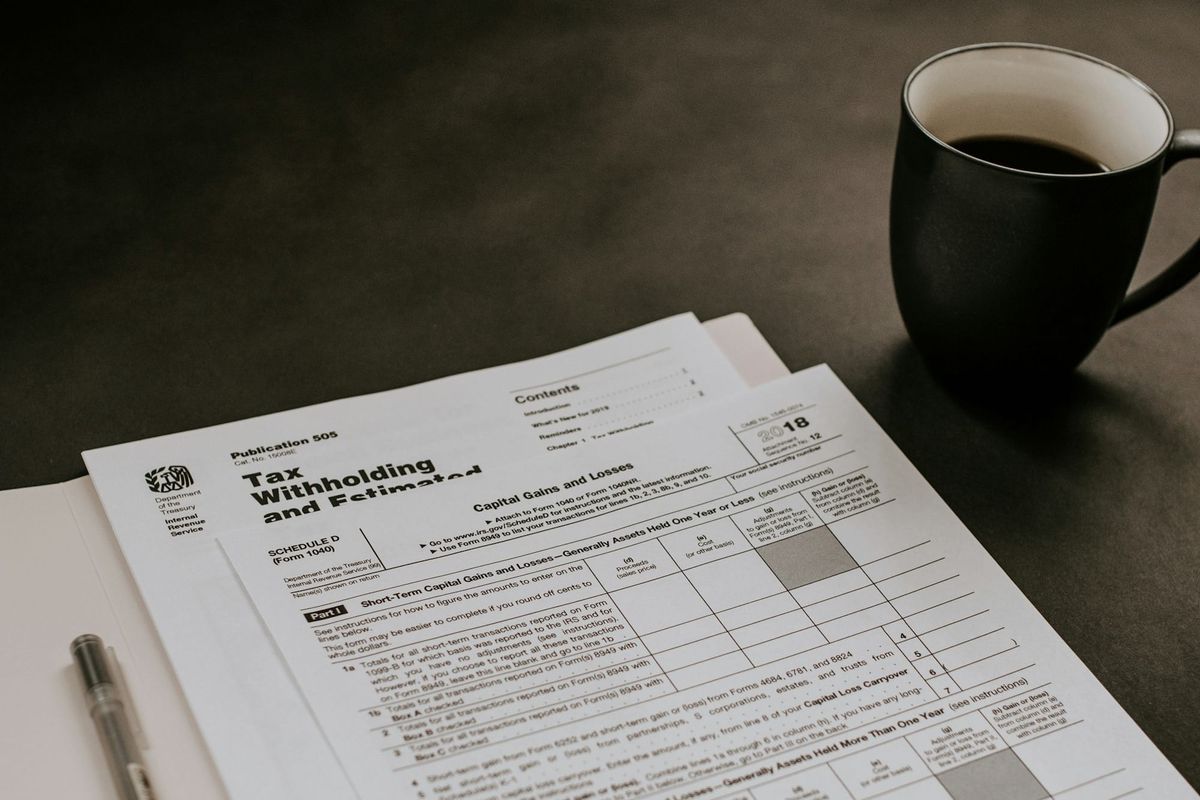
The average Australian investor holding US stocks is being taxed twice — and the second tax is often entirely avoidable. Add the CGT reform proposals now circulating in Canberra, and the stakes heading into the new financial year are higher than most retail investors realise.
This isn’t abstract policy debate. It’s dollars. Specifically: whether you’ll hand the ATO an extra few thousand dollars this June, or whether you’ve structured your positions intelligently enough to keep it.
Editor’s note: Over the next 12 months, this framework will be extended into a structured series of premium Playbooks designed to improve every layer of your investing process as an Australian with US market exposure — exclusively for WSDU paid subscribers. Each month will focus on a single decision domain — from reducing structural inefficiencies like fees, tax drag, and ETF selection, through to managing drawdowns, improving stock selection through repeatable frameworks, understanding currency exposure, and refining how portfolios are realised over time. The goal is not more information, but better decisions: helping you keep more, lose less, invest better, and scale wealth more effectively as your portfolio grows.
Now let’s break it down.
Macro Context: What’s Confirmed, What’s Proposed, What’s Speculation
First, a critical distinction — because a lot of financial commentary has been sloppy on this.
CONFIRMED LAW (current as of publication):
- The 50% Capital Gains Tax discount applies to assets held by Australian resident individuals for more than 12 months. This remains in force.
- The Attribution Managed Investment Trust (AMIT) regime allows qualifying trusts (including most ASX-listed ETFs) to pass through the character of income — including CGT discounts — directly to investors.
- The US-Australia Double Tax Convention (1982, updated 2001) reduces US withholding tax on dividends from 30% to 15% for Australian residents, and on interest from 30% to 10%.
PROPOSED / UNDER CONSULTATION (not yet law):
- A minimum 30% effective tax rate on real capital gains — calculated on CPI-adjusted (inflation-stripped) profit rather than nominal gain — has been circulating in Treasury consultation documents. As at publication, this has not passed Parliament and is not current law. If enacted, it would fundamentally change the calculus for long-hold growth investors.
- Broader negative gearing restriction proposals have been raised and deferred multiple times. The current government has not passed legislation in this term altering negative gearing on investment properties.
- CPI-indexed cost base as the basis for gain calculation (rather than nominal cost): under discussion but not legislated.
Our editorial take: The “30% minimum tax on real gains” proposal is real, it is being actively discussed within Treasury, and institutional investors are already modelling for it. You should too — not because it’s law, but because it has a credible path to becoming law before FY2028. Smart positioning now costs nothing; having to restructure a $400,000 portfolio under time pressure costs plenty.
Why this matters specifically for Aussie investors in US stocks (not just ASX):
If the proposed minimum tax on real gains is legislated, it hits long-duration US growth stock holders disproportionately hard. AAPL, MSFT, NVDA — stocks that have compounded 15-25% annually for years — have embedded gains measured in multiples of the original cost. Stripping CPI from those gains gives you a “real” profit that still looks enormous, but the minimum 30% tax applies before the 50% discount. The practical effect: your effective CGT rate rises from roughly 23.5% (50% discount, 47% marginal rate) toward 30%, with the CGT discount diminishing or eliminated on the “real gains” portion.
That’s not a rounding error. On an $80,000 realisation, it could mean an extra $5,000–$10,000 in tax depending on your income level.
The Double Taxation Problem
The US imposes a 30% withholding tax on dividends paid to non-US residents. That’s the default rate. Every dollar of dividend income from a US company — AAPL, Microsoft, REITs, ETFs held directly — gets 30% withheld before it reaches your account.
But most Australian investors don’t pay 30%. They pay 15%.
Under Article 10 of the US-Australia Double Tax Convention, the withholding rate on dividends paid to Australian residents who are beneficial owners drops from 30% to 15%. Article 11 reduces interest withholding from 30% to 10%.
The catch: the US doesn’t automatically apply treaty rates. You have to claim them. The mechanism is the W-8BEN form (Certificate of Foreign Status of Beneficial Owner for United States Tax Withholding and Reporting — Individuals).
No W-8BEN on file? Your broker withholds 30%. File it correctly? 15%. The difference is $1,313 USD per year on a $250,000 portfolio generating 3.5% in dividends. That’s free money you’re leaving on the table every single year if you haven’t done this.
How the CGT reforms interact with treaty mechanics: If Australia moves to a minimum 30% tax on real gains, you’ll be paying:
- 15% US withholding on dividends (or 30% without W-8BEN)
- Australian income tax credit for the US withholding (reduces your Australian tax bill)
- Australian CGT at the new proposed rate on eventual disposal
The interaction matters for structure decisions — which we cover in the playbooks below.
Step-by-Step Optimisation Playbooks
Playbook 1: W-8BEN Positioning
The single highest-ROI action any Australian investor in US stocks can take. Zero cost. Takes 10 minutes. Saves hundreds to thousands of dollars annually. There’s no excuse not to have this done.